
That Frustrating Moment When Your Garage Door Won't Stay Closed
You press the button on your remote, watch the garage door glide downward, and then — just before it reaches the floor — it stops and reverses back up. You try again. Same thing. Maybe it works on the third try, maybe it doesn't. Either way, you're left standing in your driveway in Ventura wondering what's going on.
This is one of the most common garage door complaints we hear from homeowners, and the good news is that it's almost always fixable. The tricky part is figuring out why it's happening, because several different issues can cause the same symptom. Let's walk through the most likely culprits so you can understand what you're dealing with.
Understanding Your Garage Door's Safety System
Before we dive into troubleshooting, it helps to understand why your garage door is designed to reverse in the first place. Since 1993, federal law has required all garage door openers to include an auto-reverse mechanism. This safety feature prevents the door from closing on a person, pet, or object in its path.
Your opener uses two primary systems to detect obstructions:
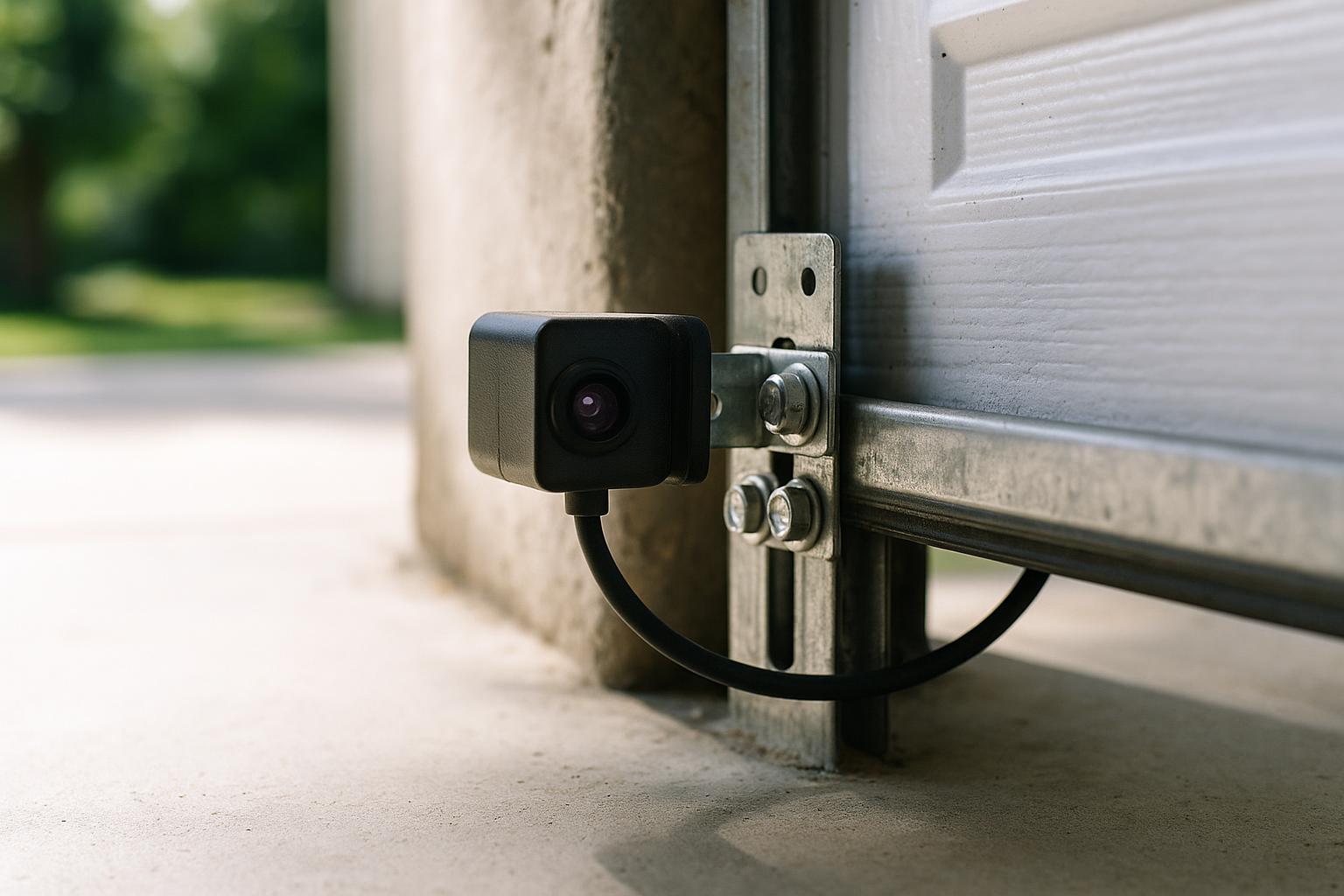
- Photo-eye sensors: Two small sensors mounted near the bottom of the door tracks on either side. They send an invisible beam across the opening. If something breaks that beam, the door reverses.
- Mechanical force settings: The opener monitors how much resistance the door encounters while closing. If it meets more resistance than expected, it assumes something is in the way and reverses.
When either of these systems is triggered — whether by a real obstruction or a malfunction — your door will reverse before closing completely.
Cause #1: Misaligned or Dirty Photo-Eye Sensors
This is the number one reason garage doors reverse prematurely, and it's often the easiest to fix. The photo-eye sensors on either side of your garage door opening need to be perfectly aligned with each other. If one gets bumped — by a bike, a trash can, a garden hose, or even a curious kid — the beam is broken and the door thinks something is blocking its path.
Here's what to check:
- Look at the small LED lights on each sensor. On most models, both lights should be steady and green (or one green and one amber). If a light is blinking, the sensors are misaligned.
- Gently adjust the sensor that's blinking until the light becomes steady.
- Clean both sensor lenses with a soft cloth. Dust, cobwebs, and moisture from Ventura's coastal air can cloud the lenses over time.
- Make sure nothing is partially blocking the sensor beam — even a leaf or a small piece of debris on the ground can cause issues.
Cause #2: Incorrect Close-Force or Travel-Limit Settings
Your garage door opener has adjustable settings that control how far the door travels and how much force it uses to close. If the close-limit setting is off, the opener may think the door has hit the ground (or an obstruction) before it actually has, triggering the auto-reverse.
Similarly, if the close-force setting is too low, the door may interpret normal friction from the tracks as resistance and reverse.
Most openers have small adjustment dials or screws on the back or side of the motor unit. Your owner's manual will show you where these are and how to make small adjustments. We recommend making only minor tweaks — a quarter turn at a time — and testing after each adjustment. If you're not comfortable doing this yourself, a professional can dial in the settings quickly.
Cause #3: Worn or Damaged Tracks and Rollers
Over time, the metal tracks that guide your garage door can become bent, dented, or clogged with debris. Rollers can wear out, crack, or lose their lubrication. When this happens, the door encounters extra friction or resistance as it moves, and the opener's force sensor interprets that resistance as an obstruction.
Walk along each track and look for:
- Visible bends, dents, or gaps in the track
- Rollers that appear cracked, chipped, or don't spin freely
- Buildup of dirt, grease, or rust inside the track channel
Minor debris can be cleaned out, and tracks can sometimes be gently straightened. But if you see significant damage to the tracks or rollers, it's best to have them repaired or replaced by a technician to avoid creating a bigger problem.
Cause #4: Broken or Weakening Springs
Your garage door springs do the heavy lifting — literally. They counterbalance the weight of the door so the opener doesn't have to work as hard. When a spring is weakening or partially broken, the door becomes heavier than the opener expects. The motor strains against the extra weight, the force sensor detects excessive resistance, and the door reverses.
Signs of spring trouble include:
- The door feels noticeably heavier when you try to lift it manually
- The door closes unevenly or appears crooked
- You hear loud creaking or popping sounds during operation
- There's a visible gap in one of the torsion springs above the door
Important safety warning: Garage door springs are under extreme tension and can cause serious injury if handled improperly. Spring replacement is not a DIY job. If you suspect a spring issue, call a professional right away.
Cause #5: Wiring or Logic Board Problems
Less commonly, the reversing issue can stem from electrical problems — frayed wiring between the sensors and the opener, a failing logic board inside the motor unit, or even power surges that have damaged internal components. Homes in older Ventura neighborhoods sometimes have wiring that has degraded over the years due to heat, moisture, or pest damage.
If you've checked the sensors, adjusted the settings, and inspected the tracks and springs without finding an obvious issue, an electrical problem may be the culprit. This type of diagnosis requires specialized knowledge and testing equipment.
When to Call a Professional
Some of these fixes — cleaning sensors, clearing debris from tracks, making small setting adjustments — are well within the ability of most homeowners. But if the problem persists after basic troubleshooting, or if you suspect spring, track, or electrical issues, it's time to bring in an expert.
Continuing to force a malfunctioning garage door to operate can lead to more expensive damage to the opener, the door panels, or the mounting hardware. More importantly, a door that doesn't reverse properly when it should is a genuine safety hazard for your family.
At Ventura Garage Door Experts, we diagnose reversing issues every week for homeowners across Ventura, Oxnard, Camarillo, and surrounding communities. We'll identify the root cause, explain your options clearly, and get your door working safely again — usually in a single visit.
Keep Your Garage Door Reliable Year-Round
The best way to prevent unexpected issues like premature reversing is with regular maintenance. An annual tune-up that includes sensor alignment checks, lubrication, spring inspection, and force-setting calibration can catch small problems before they leave you stuck in your driveway. If it's been a while since your garage door had a professional once-over, now is a great time to schedule one.