
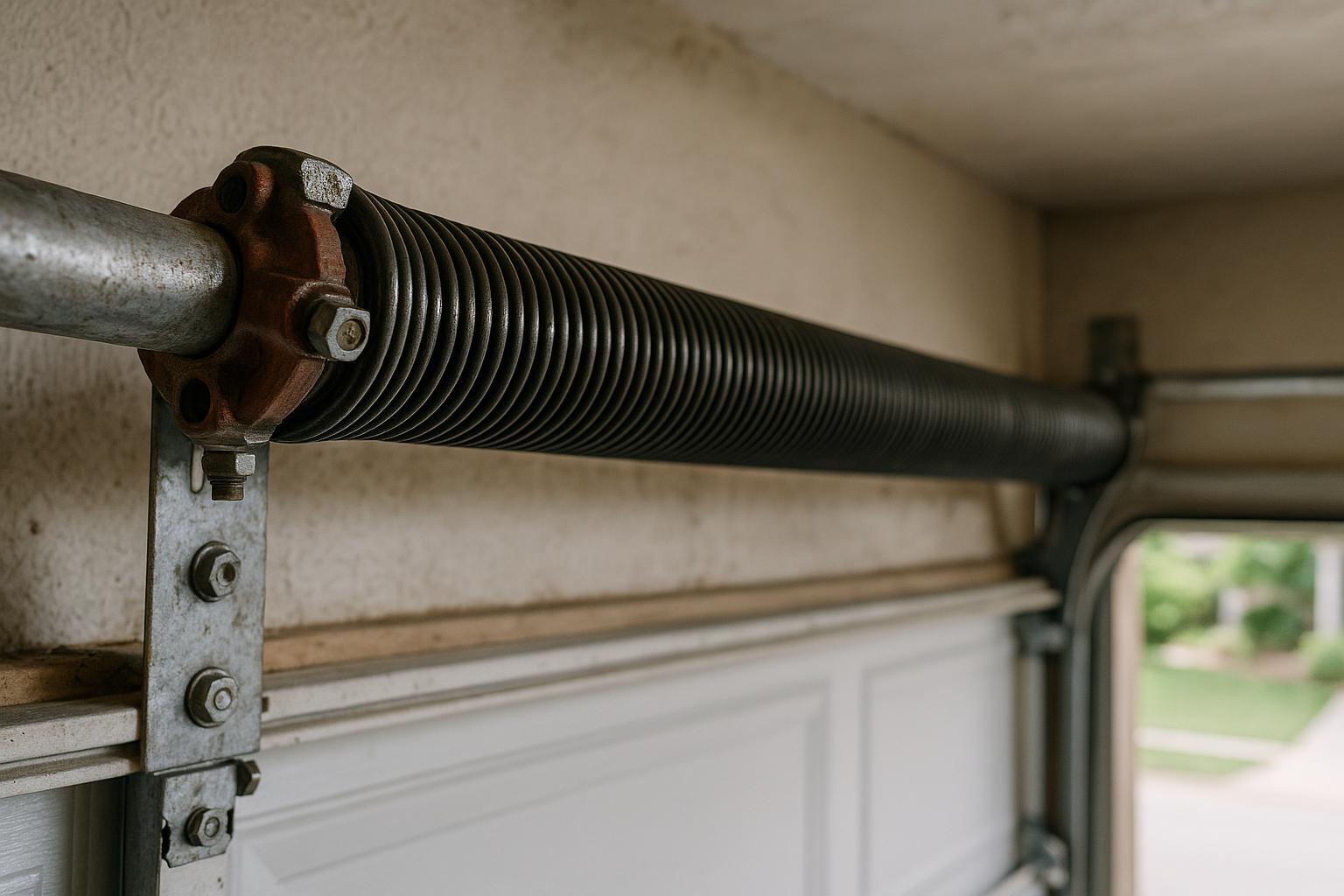
Your Garage Door Springs Are Under More Stress Than You Think
Every time you open and close your garage door, the springs do the heavy lifting — literally. A standard residential garage door can weigh anywhere from 130 to 350 pounds, and the springs are responsible for counterbalancing all of that weight. Over time, the metal fatigues, and eventually, those springs will fail.
For homeowners in Ventura, where many of us use our garages multiple times a day for commuting, storing surfboards, or accessing our homes, that wear and tear adds up fast. The good news is that garage door springs rarely break without warning. If you know what to look for, you can replace them before they snap — avoiding a potentially dangerous situation and an unexpected disruption to your day.
How Garage Door Springs Work
Before diving into the warning signs, it helps to understand the two main types of garage door springs:
- Torsion springs: These are mounted on a metal shaft above the garage door opening. They use torque to lift the door and are the most common type found in modern residential garages.
- Extension springs: These run along the horizontal tracks on either side of the door. They stretch and contract to provide lifting force and are more common in older homes.
Both types are under extreme tension, which is why spring replacement should always be handled by a trained professional. A snapping spring can cause serious injury or damage to your vehicle and property.
7 Warning Signs Your Springs Are Failing
1. Your Garage Door Feels Heavier Than Usual
Try this simple test: disconnect your garage door opener by pulling the emergency release cord, then manually lift the door about halfway. A properly balanced door should stay in place on its own. If it feels unusually heavy or slams down the moment you let go, your springs are likely losing tension and nearing the end of their lifespan.
2. The Door Opens Unevenly or Crooked
If one side of your garage door rises faster than the other, it could mean one spring is weaker or has already broken. This uneven movement puts extra strain on your opener, tracks, and cables, which can lead to a cascade of additional problems if left unaddressed.
3. You Hear a Loud Bang From the Garage
Many homeowners in Ventura have told us they heard what sounded like a gunshot or a car backfiring coming from their garage. That loud bang is often the sound of a torsion spring snapping. If this happens, do not attempt to operate the door. Call a professional immediately.
4. There's a Visible Gap in the Torsion Spring
Take a look at the spring mounted above your garage door. If you see a visible gap — where the coils have separated — the spring has already broken. Even if the door still opens with the motor, operating it in this condition is dangerous and can burn out your opener.
5. Your Garage Door Opener Struggles or Strains
When springs weaken, your garage door opener has to work much harder to lift the door. You might notice the motor sounds louder, the door opens more slowly, or the opener stops partway through the cycle. Continuing to use the opener under these conditions can shorten its lifespan significantly.
6. The Door Closes Too Fast
A garage door that slams shut instead of lowering smoothly is a serious safety hazard, especially if you have children or pets. This is a clear sign that the springs are no longer providing adequate counterbalance. Stop using the door and schedule a service call right away.
7. Your Springs Are More Than 7-10 Years Old
Most standard garage door springs are rated for approximately 10,000 cycles — one cycle being a single open-and-close. For a household that uses the garage door four times a day, that works out to roughly seven years. If your springs are approaching or past that age, proactive replacement is a smart investment.
Why You Should Never Replace Garage Door Springs Yourself
We understand the DIY spirit — it's strong here in Ventura, where many homeowners take pride in handling projects around the house. But garage door springs are one of the few home repairs where the risk genuinely outweighs the savings. Here's why:
- Extreme tension: Torsion springs are wound under tremendous force. An improperly handled spring can release with enough energy to cause broken bones, lacerations, or worse.
- Specialized tools required: Proper spring replacement requires winding bars, vice grips, and precise calibration. Using the wrong tools or technique can lead to a catastrophic failure.
- Matching and balancing: Springs need to be correctly matched to your door's weight and size. An incorrectly sized spring will cause operational problems and reduce the lifespan of your entire system.
Professional technicians have the training, tools, and experience to replace springs safely and efficiently — usually in under an hour.
What to Expect During a Spring Replacement
When you call Ventura Garage Door Experts for a spring replacement, here's what the process typically looks like:
- We inspect the entire door system, including cables, drums, tracks, and the opener.
- We identify the correct spring size and type for your specific door.
- We safely release the tension on the old springs and remove them.
- We install new springs, wind them to the proper tension, and lubricate all moving parts.
- We test the door for balance, smooth operation, and proper safety reversal function.
We also recommend replacing both springs at the same time, even if only one has broken. Since both springs were installed together, the second one is likely close behind. Replacing them as a pair saves you from a repeat service call in the near future.
Don't Wait for the Snap
A broken garage door spring is one of the most common emergency calls we receive from homeowners across Ventura, Oxnard, Camarillo, and Thousand Oaks. In most cases, the homeowner noticed at least one warning sign in the weeks leading up to the failure but put off getting it checked.
If anything on this list sounds familiar, don't wait. A quick inspection can tell you exactly how much life your springs have left and whether it's time for a replacement. It's a small investment that prevents a much bigger headache — and keeps your family safe.
Contact Ventura Garage Door Experts today to schedule a spring inspection or replacement. We offer prompt, professional service and always provide upfront pricing before any work begins.