
Your Garage Door Is the Largest Moving Part of Your Home
Think about it — your garage door goes up and down at least twice a day, sometimes more. That's over 1,400 cycles per year. Despite all that use, most homeowners in Ventura and the surrounding area never give their garage door a second thought until it stops working, starts making strange noises, or refuses to open on a Monday morning when they're already running late.
The truth is, regular garage door maintenance can prevent most breakdowns, extend the life of your system by years, and even keep your family safer. But how often should you actually schedule a tune-up? And what does a proper maintenance visit include? Let's break it down.
The Short Answer: At Least Once a Year
For most residential garage doors, a professional maintenance service once a year is the minimum recommendation. If your garage door sees heavier-than-average use — maybe you have multiple drivers in the household, use your garage as a workshop, or operate a home business — twice a year is a smarter choice.
Here in Ventura, our relatively mild climate means we don't deal with the extreme freeze-thaw cycles that punish garage doors in colder states. However, coastal moisture and salt air can accelerate corrosion on springs, hinges, and tracks, making regular inspections especially important for homes closer to the coast.
What's Included in a Professional Garage Door Tune-Up?
A thorough maintenance visit isn't just a quick glance at your door. Here's what a qualified technician should be checking and servicing:
1. Visual Inspection of All Components
The technician will examine your springs, cables, rollers, pulleys, hinges, tracks, and weatherstripping for signs of wear, rust, or damage. Catching a fraying cable or a cracked roller early can prevent a much more expensive repair later.
2. Spring Tension and Balance Test
Your garage door should stay in place when manually lifted to the halfway point. If it slides up or crashes down, the spring tension is off. Improperly balanced doors put extra strain on your opener and can wear out components prematurely. This is also a safety issue — a door that's out of balance can come down unexpectedly.
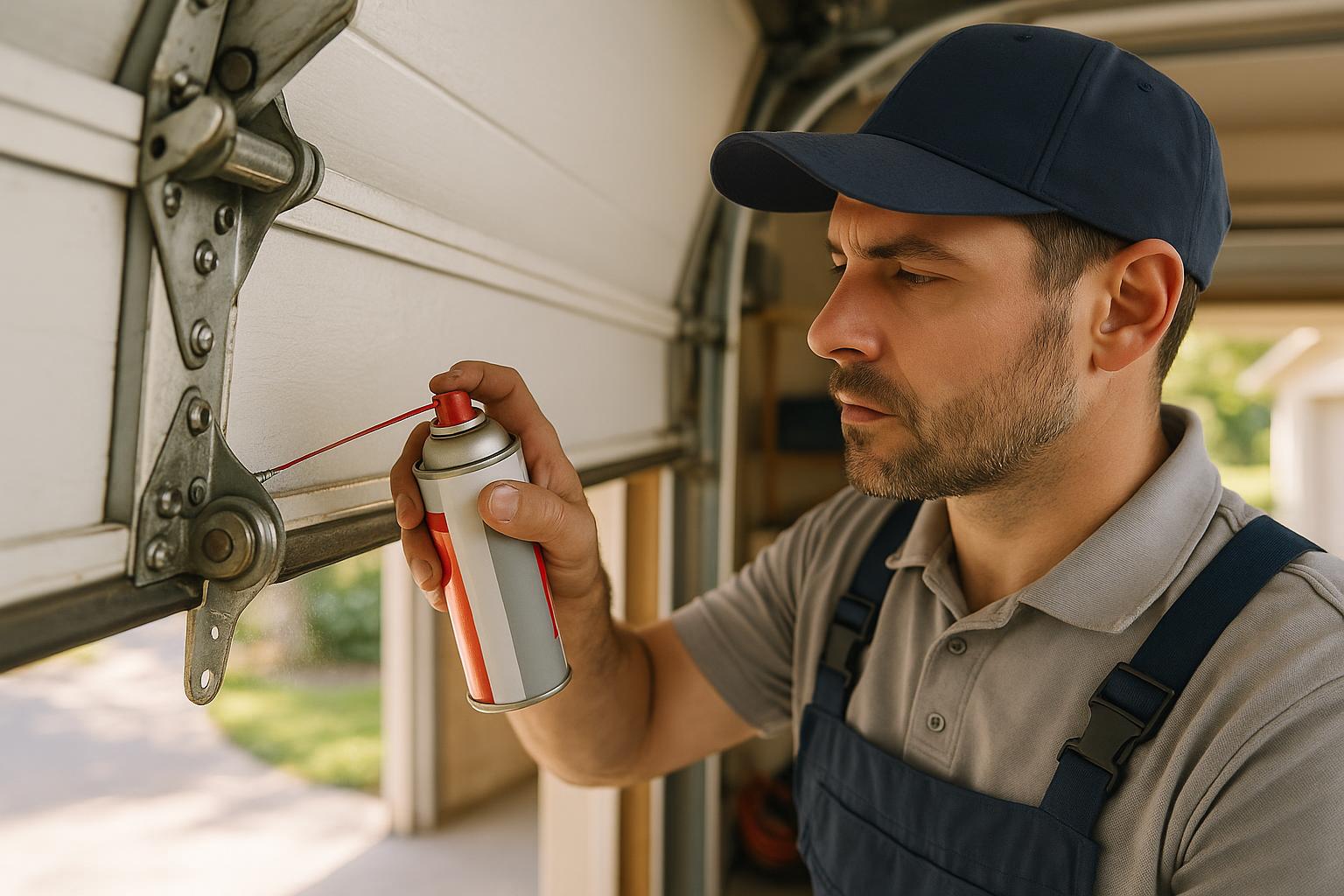
3. Lubrication of Moving Parts
Rollers, hinges, springs, and the opener chain or screw drive all need proper lubrication to operate smoothly and quietly. Using the right type of lubricant matters — standard WD-40 isn't ideal for most garage door components. A professional-grade silicone or lithium-based lubricant is the better choice.
4. Track Alignment Check
Even slightly misaligned tracks can cause your door to bind, operate unevenly, or go off track entirely. Your technician will check that the tracks are properly aligned and securely fastened to the wall.
5. Safety Reversal System Test
Modern garage doors are equipped with auto-reverse mechanisms and photoelectric sensors near the floor. These are critical safety features designed to prevent the door from closing on a person, pet, or object. During maintenance, these systems are tested to ensure they respond correctly.
6. Opener Inspection
The garage door opener itself gets a checkup too — including the drive mechanism, force settings, travel limits, and remote functionality. If your opener is aging, your technician can let you know before it fails completely.
7. Weatherstripping and Seal Evaluation
The rubber seal along the bottom of your door and the weatherstripping around the frame keep out dust, pests, and moisture. Over time these materials crack and deteriorate, especially with sun exposure. Replacing worn seals is a small cost that protects your garage's interior.
What Can You Do Between Professional Visits?
You don't have to leave everything to the pros. There are a few simple things you can do monthly or seasonally to keep your garage door in good shape:
- Listen for unusual sounds. Grinding, squealing, or popping noises are early warning signs that something needs attention.
- Watch the door operate. Does it move smoothly, or does it jerk or hesitate? Does it close evenly on both sides?
- Keep the tracks clean. Wipe down the inside of the tracks with a damp cloth to remove dirt and debris. Avoid using lubricant directly on the tracks — it can attract grime and make things worse.
- Test the balance. Disconnect the opener and manually lift the door halfway. If it doesn't stay put, call a professional to adjust the springs. Do not attempt spring adjustments yourself — garage door springs are under extreme tension and can cause serious injury.
- Check the bottom seal. If you see daylight, feel drafts, or notice pests getting in, it's time for a replacement.
The Cost of Skipping Maintenance
We understand that scheduling maintenance for something that seems to be working fine feels unnecessary. But consider this: a basic annual tune-up typically costs a fraction of what an emergency spring replacement or opener repair runs. More importantly, a sudden garage door failure is more than an inconvenience — it can leave your home unsecured or trap your vehicle inside the garage.
Some of the most common emergency calls we receive in Ventura, Oxnard, Camarillo, and Thousand Oaks could have been prevented with routine maintenance. Broken springs, snapped cables, and burned-out openers rarely fail without warning. There are almost always early signs that a trained eye would catch during a tune-up.
How Long Should a Garage Door Last?
With proper maintenance, a quality garage door can last 20 to 30 years. The opener typically lasts 10 to 15 years. Springs have a more limited lifespan — standard torsion springs are rated for about 10,000 cycles, which translates to roughly 7 to 10 years of average use. High-cycle springs are available and can last significantly longer, which is something worth discussing with your technician during a maintenance visit.
The key takeaway is that none of these components reach their full potential lifespan without regular care. Neglect shortens the life of every part of your garage door system.
When Should You Call a Professional Between Scheduled Visits?
Don't wait for your next annual tune-up if you notice any of the following:
- The door won't open or close completely
- You hear loud banging, snapping, or grinding sounds
- The door is visibly crooked or off-track
- The opener runs but the door doesn't move
- You see a broken spring or frayed cable
- The door closes too fast or slams shut
These situations call for prompt professional attention. Continuing to operate a malfunctioning garage door can cause further damage and create a safety hazard.
Keep Your Garage Door Running Smoothly
Your garage door works hard every day. A little preventive maintenance goes a long way toward avoiding unexpected breakdowns, costly repairs, and safety risks. Whether you're in Ventura, Simi Valley, Moorpark, or anywhere in between, scheduling an annual garage door tune-up is one of the easiest ways to protect your home and your investment.
If it's been more than a year since your last service — or if you can't remember the last time your garage door was professionally inspected — now is a great time to schedule a maintenance visit. Ventura Garage Door Experts is here to help keep your door running safely and reliably, all year long.